

During the Winter Olympics at the Spring Festival,
the "ice and snow boom" once again ignites passion for consumption.
As countless visitors flock to Changbai Mountain,
immersed in the romance of the snowy fairyland,
few realize that this breathtaking winter landscape
is rooted in China's first EPC-based pilot project
for ecosystem restoration
of mountains, rivers, forests, farmland, lakes, and grasslands,
undertaken by IPPR.
It is this systematic restoration effort
that has brought forests back to life, rivers to clarity, and wildlife to vitality,
guarding the winter beauty of Changbai Mountain with ecological resilience,
and shaping the remarkable ice-and-snow destination seen today.
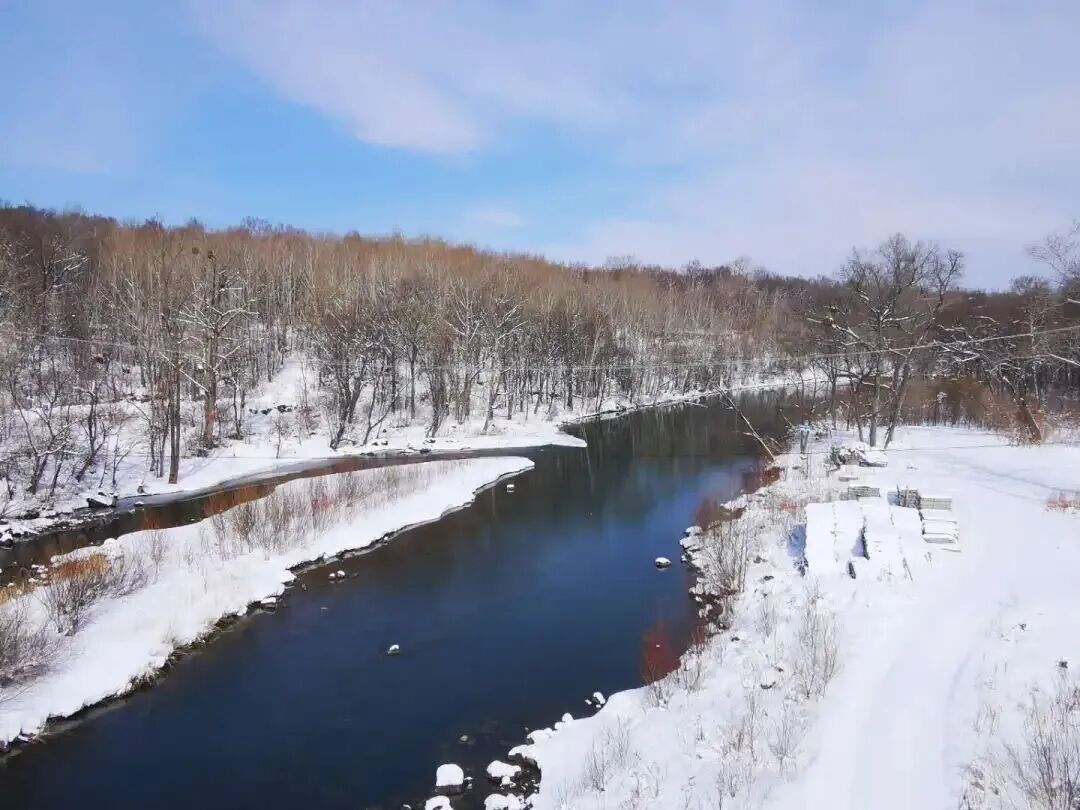
In southeastern Jilin Province, a green backbone stretches along the China-DPRK border. This is Changbai Mountain. The region's high-cold mixed coniferous and broadleaf forests function as a natural ecological regulator, conserving water resources and moderating climate conditions across Northeast Asia, while serving as a habitat for endangered species such as the Siberian tiger, Amur leopard, Northeast yew, and Korean arborvitae. Yet this pristine land once faced the challenge of "ecological fragmentation". Connectivity between core conservation areas and surrounding regions weakened, making it hard for tigers and leopards to find migration corridors. The forests' carbon sequestration and water conservation functions declined year by year, while certain river sections suffered ecological degradation due to human disturbances. Habitats for rare plants had been shrinking, leading to a continuous decline in populations of species such as the hart's-tongue fern and arborvitae. The "health index" of this ecological barrier in Northeast Asia had begun to flash warning signs.
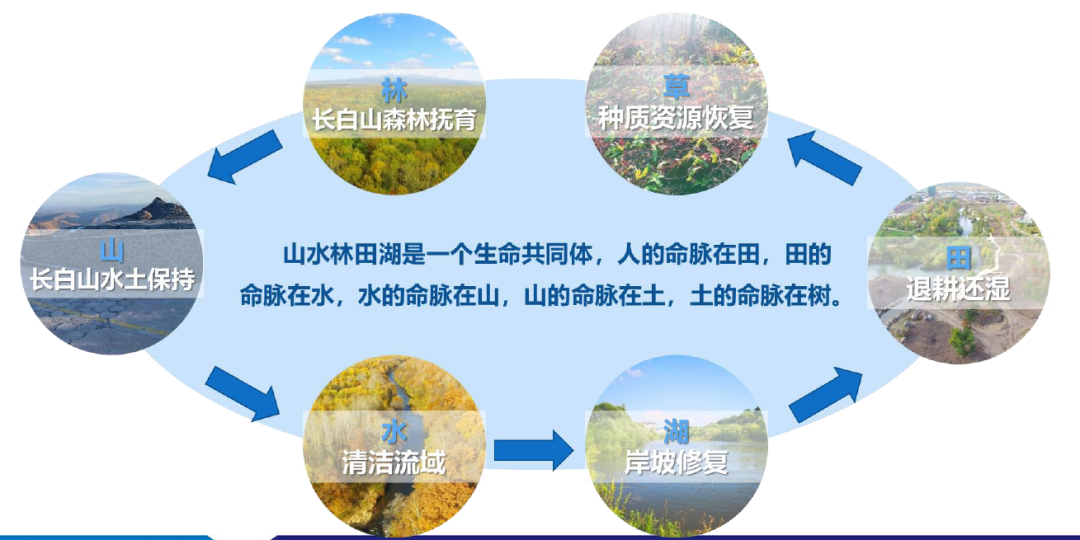
Today, with the full implementation of China's first EPC-based pilot project for ecosystem restoration, this situation has been fundamentally reversed. The Toudao Bai River once again showcases scenes of fish swimming in clear, shallow waters, while the Jian Shui River wetlands have become a "five-star stopover" for migratory birds. Not only has Changbai Mountain restored its ecology, characterized by "lush forests, abundant waters, roaming wildlife, and soaring birds", but the project has also set a benchmark, which?"exceeds the threshold for all indicators and innovates across all processes". It provides a replicable and scalable model for comprehensive ecosystem management in high-altitude, cold-climate, and cross-border regions nationwide.
Breaking New Ground: Confronting Ecological Challenges with 51 Restoration Projects to Meet 12 Key Performance Indicators
The ecological challenges of Changbai Mountain stem from the compounded effects of the region's "harsh high-cold conditions" and "ecosystem fragmentation". With average annual temperatures ranging from -7°C to 3°C and a frozen soil period lasting up to six months, the pace of ecological recovery is significantly slower than the rate of degradation. Disparities in management between protected areas and surrounding regions have led to the disruption of ecological corridors, creating "isolated ecological islands". Meanwhile, during urbanization and industrialization, activities such as waste disposal and hydropower station development have further encroached upon natural habitats, intensifying pressure on biodiversity conservation.
Faced with these formidable challenges, IPPR adopted a "systemic governance" approach, implementing 51 ecological projects to meet 12 performance indicators. These sub-projects span multiple sectors, including communications, municipal infrastructure, agriculture and forestry, and water conservancy, forming a multi-dimensional restoration framework covering above-ground and underground areas, mountains and foothills, and land and water. From harmless waste treatment and forest tending across 5,103 hectares, to the restoration of 302.81 hectares of wetlands, and the removal of 14 small hydropower stations to restore natural river systems, the project successfully met all 12 assessment indicators covering geological hazard mitigation, habitat protection for rare species, and the restoration of endemic plant populations. The project has truly achieved its goal of "restoring, stabilizing, and sustaining" ecosystems, establishing an integrated mountain-river-forest-farmland-lake-grassland ecological governance model for Changbai Mountain.
Tackling Challenges: Innovating EPC Management for Large-Scale Ecological Pilot Projects
As China's first large-scale EPC pilot project for integrated ecological protection and restoration of mountains, rivers, forests, farmland, lakes, and grasslands, the Changbai Mountain initiative faced lack of prior experience or standards from the outset, with major difficulties in coordination, supervision, and balancing. Specifically, the projects were dispersed across national nature reserves, urban areas, and cross-border forest regions. The combination of scattered locations and their cross-sector nature made coordination difficult. Also, regulatory standards varied across multiple authorities, while the project owner functioned as the manager and client at the same time. Furthermore, ecological restoration efforts required a balance between construction progress and environmental protection, which traditional management models struggled to achieve effectively.
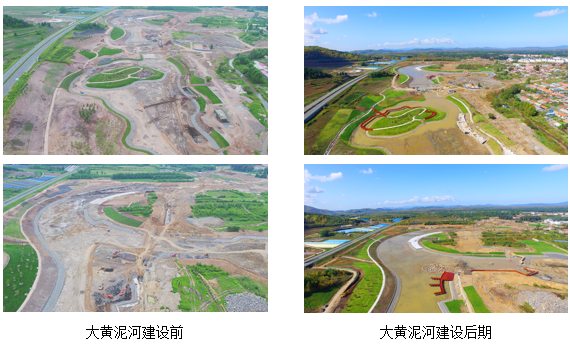
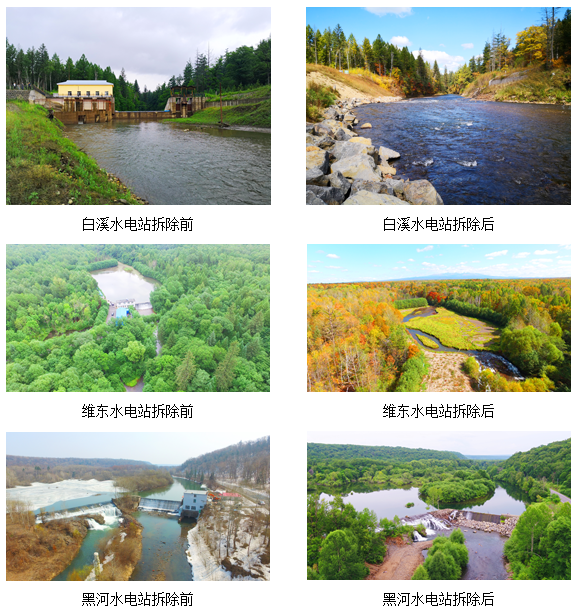
To address these challenges, the project team innovatively established an "integrated EPC management system for pilot projects", developing a full-process solution that effectively resolved key issues and ensured the successful delivery of all 12 performance indicators. Based on industries and regions, six dedicated project divisions were set up across agriculture and forestry, water conservancy, municipal engineering, and other fields, each supported by specialized technical teams to enable cross-disciplinary coordination and control. A digital information platform was developed to achieve progress tracking, while a multi-stakeholder communication mechanism was established to facilitate efficient collaboration among all parties. In parallel, ecological restoration protocols were formulated to prioritize restoration over construction. Through systematic governance and refined management strategies, the project team worked together to safeguard the ecosystem, allowing Changbai Mountain to regain vitality and undergo an ecological renewal through restoration initiatives.
Outcomes: Strengthened Ecological Barrier with Triple Value Gains
Today, Changbai Mountain's function as the ecological barrier has been comprehensively enhanced, forming a virtuous cycle of "ecological improvement – economic growth – livelihood enhancement".
Upgraded Ecological Barrier: Forest coverage has increased significantly, wetland areas have steadily expanded, and water conservation capacity in permafrost regions has been greatly improved. The water quality at the source of the Songhua River has consistently remained at Class II or above.
Expanded Biodiversity Gene Pool: The activity range of rare wildlife such as Siberian tigers and Amur leopards has continued to expand. New records of rare species, including leopard cats and Siberian musk deer, have been documented. Populations of valuable plant species such as Korean arborvitae have been effectively restored and increased.
Win-Win for Economy and Livelihoods: Ecotourism has surged in popularity, generating substantial income growth. Local forestry workers have successfully transitioned into "ecological stewards", with markedly improved living standards, creating a win-win pathway for ecological protection and livelihood development.
From "ecological warning signs" to a "stabilized ecological barrier", the Changbai Mountain ecosystem restoration project has shown that:
Multi-system ecological restoration is not an insurmountable challenge. By leveraging the EPC model to integrate technology, management, and cross-regional coordination, and by balancing construction progress with ecological protection, it is possible to restore the brilliance of this "ecological jewel" of Northeast Asia, which?provides a vivid model for EPC-based ecological restoration nationwide. Looking ahead, the "Changbai Mountain model" will continue to evolve, contributing further to strengthening China's ecological security framework.